

What Does EMDR Therapy Feel Like? A Session-by-Session Guide for First-Timers

Starting EMDR therapy can bring up a lot of questions.
You may wonder what will happen in the first session, whether you will have to talk about painful memories right away, or what it will feel like when the actual processing begins. You may also feel nervous about doing EMDR therapy online, especially if you have only heard about EMDR in the context of eye movements or trauma treatment.
These questions are normal.
EMDR Therapy, or Eye Movement Desensitization and Reprocessing, is a structured therapy approach that helps the brain process distressing memories, emotional triggers, and experiences that still feel “stuck.” For many people, it can feel different from traditional talk therapy because the focus is not only on discussing what happened. It also includes noticing thoughts, emotions, body sensations, and using bilateral stimulation, such as guided eye movements, tapping, or sounds.
If you are considering EMDR therapy online in NC, this session-by-session guide can help you understand what the process may feel like before you begin.
First, What Does EMDR Therapy Usually Feel Like?
EMDR therapy can feel calm, focused, emotional, surprising, tiring, or relieving at different points in the process. Some people feel nervous before starting because they think they will have to relive every detail of a painful experience. But EMDR is not about forcing you to retell everything. It is about helping your brain and body process what still feels unresolved, at a pace that feels safe enough for you.
During EMDR, you may notice memories, images, emotions, body sensations, or thoughts coming up. Sometimes they make sense right away. Other times, they may feel random or unexpected. Your therapist will guide you through the process and help you stay grounded. The experience is not the same for everyone. Some people feel a shift quickly. Others need more time. Both are normal.
Before Your First EMDR Session
Before you begin EMDR, your therapist will usually ask about your history, current symptoms, goals, and what brings you to therapy now. This does not mean you have to share everything immediately. You can go slowly. You can say when something feels too much. You can also let your therapist know what you are worried about.
If you are doing virtual EMDR, your therapist may also help you prepare your space. They may ask you to choose a private room, use headphones, check your internet connection, and keep water nearby. The goal is to help you feel as comfortable and safe as possible during online sessions. EMDR therapy online in NC can be especially helpful for people who want trauma-informed support from home. Being in a familiar space may make it easier to begin, especially if you feel anxious about attending in-person sessions.
Session 1: Getting to Know You
The first EMDR session often feels like an intake session.
Your therapist will want to understand what you are experiencing and what kind of support you need. They may ask about anxiety, trauma, relationships, sleep, emotional triggers, coping skills, and any previous therapy experience. You may talk about what you hope will feel different after therapy. For example, you may want to feel less anxious, stop reacting so strongly to certain triggers, process a painful memory, or feel more grounded in your daily life.
This session is not usually about jumping straight into trauma processing. It is more about building understanding, safety, and trust. You may leave the first session feeling relieved, nervous, hopeful, or emotionally tired. That is normal. Opening the door to therapy can bring up a lot, even when the conversation is gentle.
Session 2: Building Safety and Grounding Skills
Before deeper EMDR processing begins, your therapist will usually help you build tools for staying grounded. This phase is important because EMDR can bring up emotions and body sensations connected to difficult experiences. You need ways to return to the present moment when things feel intense.
Your therapist may teach grounding exercises, breathing tools, calming imagery, or ways to notice what is happening in your body without becoming overwhelmed. In virtual EMDR, this preparation can also include deciding what type of bilateral stimulation feels best for you. Some clients use visual movements on screen. Others may use self-tapping or audio-based stimulation.
This session may feel practical and supportive. You may not feel like you are “doing EMDR” yet, but this stage is part of EMDR and may last more than one session. Safety comes first.
Session 3: Choosing What to Work On
Once you and your therapist have built enough preparation, you may begin identifying targets for EMDR processing. A target may be a specific memory, image, feeling, belief, or trigger. It might be something from childhood, a past relationship, an accident, a loss, a panic experience, or a situation that still feels emotionally charged.
Your therapist may ask what negative belief is connected to the experience. For example:
- “I am not safe.”
- “It was my fault.”
- “I am powerless.”
- “I am not good enough.”
- “I cannot trust myself.”
You may also identify a more helpful belief you would like to move toward, such as:
- “I am safe now.”
- “I did the best I could.”
- “I have choices.”
- “I am enough.”
- “I can trust myself.”
This session may feel clarifying. It can help you understand how one memory or pattern may still be affecting your present life.
Session 4: Beginning EMDR Processing
This is the part many people are most curious about.
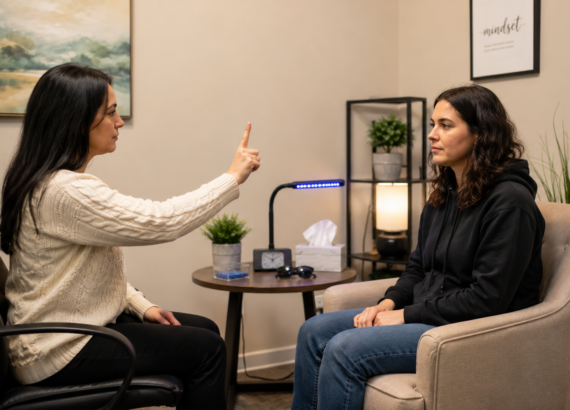
During EMDR processing, your therapist may ask you to briefly bring up the target memory, feeling, or belief while also using bilateral stimulation. This might involve following a visual cue, listening to alternating sounds, or tapping from side to side. You do not have to explain everything out loud while it is happening. Your therapist may simply ask what you notice between sets.
You might notice emotions, body sensations, images, thoughts, memories, or a shift in how the target feels. Some people experience sadness, anger, relief, warmth, tension, or calm. Some notice the memory becoming less sharp or more distant. Others notice new connections forming. The experience can feel unusual at first because your brain may move in ways you did not expect. Your job is not to control it. Your job is to notice what comes up and let your therapist guide the process.
During EMDR therapy online, your therapist will still stay present with you, check in regularly, and help you pause or slow down when needed.
Session 5: Noticing Emotional Shifts
After some processing, you may begin to notice that the memory or trigger feels different. It may not disappear, but it may feel less intense. You may still remember what happened, but your body may react with less fear, shame, or panic.
Some people describe it as feeling more distant. Others say, “I know it happened, but it does not feel like it is happening right now.” That kind of shift can be meaningful. You may also notice changes outside the session. A situation that used to trigger you may feel easier to handle. You may recover faster after a difficult moment. You may feel less controlled by the old belief.
This does not mean every problem is solved in one session. EMDR therapy online in NC, like in-person EMDR, is a process. Healing often happens in layers.
Session 6: Working With the Body
EMDR is not only about thoughts. It also pays attention to the body.
Your therapist may ask you to notice whether any tension, heaviness, tightness, or discomfort remains when you think about the memory. This is sometimes called a body scan. You may notice pressure in your chest, tightness in your throat, tension in your stomach, or a feeling of restlessness. These sensations can give important information about what your nervous system is still holding.
This part of EMDR may feel quiet but powerful. Sometimes the mind says, “I am okay,” while the body still feels unsettled. EMDR gives space for both. If something still feels activated, your therapist may continue processing. If your body feels calm or neutral, that may show that the target has shifted.
Session 7: Closure and Grounding
Every EMDR session should end with closure.
Closure does not mean everything is fully resolved in that one session. It means your therapist helps you return to the present and feel steady enough before the session ends. This may include breathing, grounding, calming imagery, noticing the room around you, or reviewing what you need after the session.
You may feel tired after EMDR. You may also feel lighter, emotional, reflective, or calm. Some people notice vivid dreams, new thoughts, or emotional shifts between sessions. Your therapist may encourage you to take care of yourself afterward. This may mean drinking water, resting, journaling, taking a walk, or avoiding heavy tasks immediately after a deeper session.
With virtual EMDR, it can help to give yourself a few quiet minutes after the session before returning to work, errands, or family responsibilities.
Session 8: Reevaluation and Next Steps
At the beginning of a later session, your therapist will usually check how things have felt since the last session. They may ask whether the memory still feels distressing, whether the positive belief feels true, and whether anything new came up between sessions.
This is called reevaluation. It helps you and your therapist decide what to work on next. Sometimes the same target needs more processing. Sometimes you move to a related memory or theme. Sometimes you shift toward present-day triggers or future situations you want to handle differently.
EMDR therapy online is not always a straight line. Your brain may connect one experience to another. Your therapist helps organize the process so it feels safe and focused.
Does EMDR Feel Intense?
EMDR can feel intense at times, but it should not feel out of control.
A trained therapist will help you stay within a manageable range. You can pause at any time. You can slow down. You can tell your therapist if something feels too much. The goal is not to flood you with emotion. The goal is to help your brain and body process experiences that have been stuck.
Some sessions may feel emotional. Others may feel calm or practical. Some may feel tiring because your brain is doing deep work. This is why preparation, pacing, and trust with your therapist matter so much.
Is Virtual EMDR Different From In-Person EMDR?
Virtual EMDR follows the same basic EMDR process, but the tools are adapted for online therapy. Instead of sitting in the same room, you meet through a secure video platform. Bilateral stimulation may happen through on-screen visual cues, audio, or guided tapping.
Many people find virtual EMDR comfortable because they can do therapy from a familiar space. This can reduce barriers like travel time, scheduling stress, or anxiety about going into an office. If you are looking for emdr therapy online in NC, virtual EMDR may allow you to receive trauma-informed care without needing to leave home.
Your therapist will help you decide whether online EMDR therapy is appropriate for your needs, symptoms, and safety.
What If I Feel Nervous Before Starting?
Feeling nervous before EMDR is completely understandable.
You may worry about what will come up. You may wonder if it will work. You may feel afraid of opening memories you have worked hard to avoid. You can bring those concerns into the first session. In fact, talking about your fears can help your therapist support you better.
You do not have to be perfectly ready. You only need to be honest about where you are. A good EMDR therapist will not rush you. They will help you understand the process, build grounding tools, and move at a pace your nervous system can handle.
How Do I Know If EMDR Is Helping?
EMDR may be helping if the memory or trigger feels less intense, your body feels calmer, or you recover more quickly from situations that used to overwhelm you.
You may also notice:
- Less emotional reactivity
- Fewer intrusive thoughts
- More self-compassion
- Better sleep
- Less shame
- More confidence
- A stronger sense of safety
- More ability to stay present
Progress can be subtle at first. Sometimes people notice change during a session. Other times, they notice it days later when an old trigger does not affect them in the same way. Healing is not about forgetting what happened. It is about feeling less controlled by it.
When to Consider EMDR Therapy Online in NC
You may want to consider EMDR therapy online in NC if painful memories, trauma, anxiety, panic, grief, or emotional triggers are affecting your daily life. Online EMDR may also help if you understand your patterns logically but still feel stuck in your body. You may know you are safe, but still feel fear. You may know something was not your fault, but still feel shame. You may know a relationship is different now, but still react as if the past is repeating.
These are the kinds of patterns EMDR can help address.
At Mindspace Counseling, virtual EMDR is offered in a compassionate, trauma-informed way. The goal is not to rush your healing. The goal is to help you feel safer, steadier, and more connected to yourself.
Final Thoughts
EMDR therapy can feel different from traditional therapy, especially if you are new to it. It may involve less talking during processing, more attention to body sensations, and a structured approach to helping the brain reprocess distressing experiences. For first-timers, the most important thing to know is this: you do not have to jump into the hardest memory right away. EMDR begins with safety, preparation, and trust.
Whether you choose EMDR therapy online, virtual EMDR, or another trauma-informed approach, support should move at a pace that feels manageable. If you are ready to explore EMDR therapy online in NC, Mindspace Counseling can help you understand your options and begin the process with care. Schedule a session now.
FAQs
1. What does EMDR therapy feel like?
EMDR therapy may feel focused, emotional, calming, tiring, or relieving depending on the session. You may notice memories, emotions, body sensations, or new thoughts as your brain processes distressing experiences.
2. Do I have to talk about every detail during EMDR?
No. You do not have to share every detail of a painful memory. EMDR allows processing to happen without retelling everything out loud. Your therapist will guide you at a safe pace.
3. Is EMDR therapy online effective?
EMDR therapy online can be helpful for many people when provided by a trained therapist. Virtual sessions can use guided eye movements, tapping, or audio-based bilateral stimulation.
4. What should I expect during virtual EMDR?
During virtual EMDR, you meet with your therapist through a secure online platform. Your therapist may guide you through grounding, target selection, bilateral stimulation, processing, and closure.
5. Can I do EMDR therapy online in NC?
Yes. EMDR therapy online in NC is available for clients who want trauma-informed support from home. A therapist can help determine whether online EMDR is a good fit for your needs.
6. Will EMDR make me relive my trauma?
EMDR is not designed to make you relive trauma. You may briefly focus on distressing material, but your therapist helps you stay grounded and within a manageable range.
7. How many EMDR sessions will I need?
The number of sessions depends on your history, goals, symptoms, and what you are processing. Some people work on one specific event, while others use EMDR for several memories or ongoing patterns.

No Comments